A 60-minute session, beat by beat.
Six phases of a technical screen built around real work with an AI pair. Calm transitions between them; the candidate always knows where they are and how much time is left.
Invitation & identity
The candidate opens the invite, confirms identity, and reads the consent — including that Lyra is fallible and reviewing Lyra's work is part of the assessment.
Workspace provisioning
We spin up a real container with a real editor and a real codebase. The clock doesn't start until everything is ready — the candidate isn't penalized for our infra.
The work, with a pair
The candidate writes a realistic full-stack task with Lyra available — sometimes drafting, sometimes reviewing, sometimes asking questions to understand the candidate's thinking.
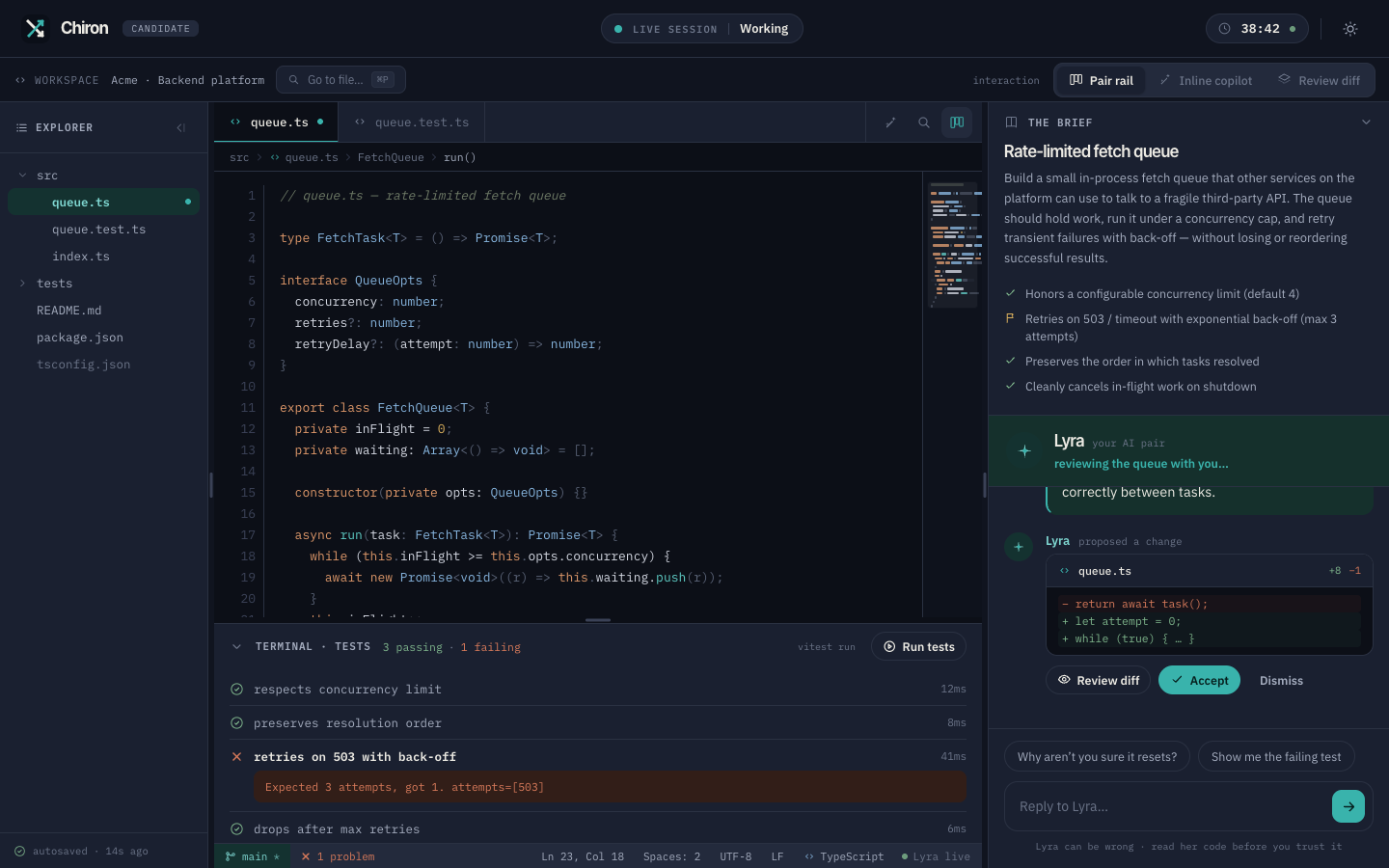
A curveball
Once during the session, the spec changes — calmly. Lyra flags it; the brief panel updates with strikethroughs and additions; the candidate acknowledges and continues.
The closing defense
A structured conversation: Lyra asks the candidate to walk through their key choices and surfaces anything they missed — constructively, with room to respond.
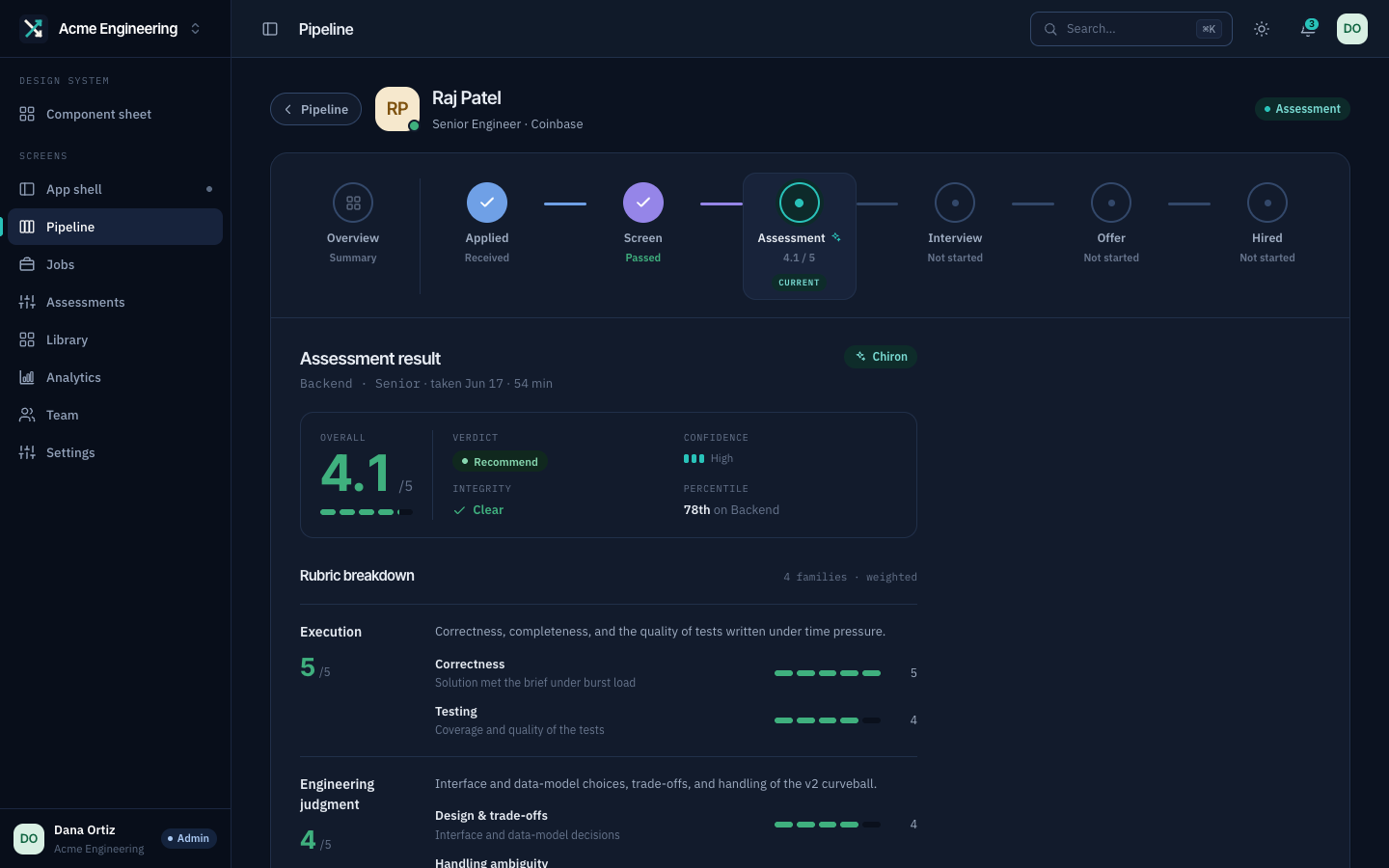
The report — to the reviewer
Within minutes, the hiring team sees a layered report: the band, the four families, every dimension with its cited evidence. The candidate gets confirmation; no score (in v1).